What Does Hunter Education Actually Teach? A Complete Module Breakdown
Hunter education courses cover core topics that give new hunters the critical knowledge they need to build a foundation as safe, responsible, and legal hunters:
- Hunting ethics
- Firearms safety
- Ammunition selection
- Conservation
- Wildlife identification
- First aid
- Survival
- Tree stand safety
- Your state’s hunting regulations
But what does hunter ed cover from state to state? Since each state’s wildlife agency establishes course standards, all state-approved courses cover the same required material. When students demonstrate understanding through a final exam and (optional) field day, they receive a certificate that allows them to purchase a hunting license.
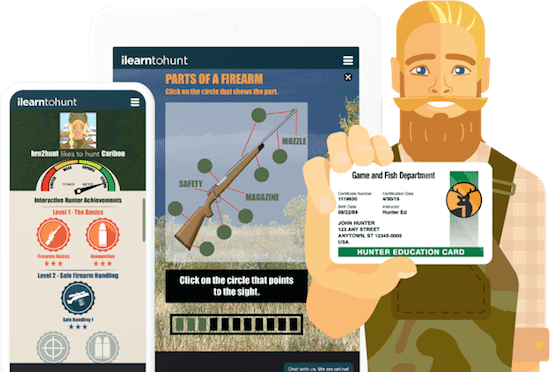
The difference between courses lies in how the material is presented. Students can choose a traditional classroom setting, attending a course in person at a fixed location and time. But ilearntohunt is a legitimate hunter ed course that offers an online course that uses an interactive, scenario-based approach. Instead of relying on text and videos to present the material, students make decisions for a character as they work through realistic hunting situations.
Let’s take a closer look at core hunter education topics and what you’ll learn in an ilearntohunt course for your state.
What Does Hunter Ed Cover?
No matter which state-approved course you take, hunter education programs build a common foundation in hunting laws, conservation, safety, and hunting ethics.
Hunter education is also more than a basic firearms safety class, although that is a critical component. Courses teach students how to handle hunting equipment properly, identify game in the field, understand wildlife management practices, respond to medical and basic survival situations, understand state-specific regulations, and make ethical decisions.
Teaching those same essential topics is what makes a state-approved course eligible for a hunting license. Once a state wildlife agency recognizes a hunter education provider, that provider's course becomes a legitimate, credible option for hunter education certification.

While all this information may seem overwhelming at first, hunter education is important. Online courses break lessons into smaller, easier-to-digest modules. This approach lets students learn at a more comfortable pace and retain more information before moving on to the next module.
How to Complete Hunter Education Module by Module
The self-paced ilearntohunt course is designed to let students move through the modules without time limits. You don't need to commit to a full day in a classroom or deal with the pressure of timed modules. Each module builds on the knowledge and skills learned from previous modules.
Here’s how to complete your hunter education in six steps:
- Select your state and enroll in the course. Select your state of residence on the ilearntohunt website to find the approved course that meets your state’s hunter education certification requirements.
- Start with firearm safety. The first part of the course focuses on firearm safety, including handling, storage, transportation, muzzle awareness, and other key foundational practices.
- Work through each module in sequence. Complete the scenario-based lessons and quizzes in order before moving to the next module.
- Pay close attention to your state regulations. The module covering your state’s hunting regulations is critical because it directly affects how you hunt, species-specific seasons, bag and possession limits, legal equipment, and licensing requirements for hunting and trapping.
- Complete the final exam. After you’ve completed all of the course modules, take the comprehensive final exam. The exam should take approximately 30-45 minutes and can be retaken as many times as necessary to pass.
- Receive your certification document. Once you’ve passed the final exam and completed any additional state requirements (like a field day), you will be issued a hunter education certificate that is necessary for purchasing a hunting license.
ilearntohunt courses have no timers. That means you control the pace and can work through each module at your convenience. This flexibility lets students finish the online course in one focused session, while others will complete the material over several shorter sessions.

Hunter Education Module Topics and How ilearntohunt Teaches Them
What do you learn in hunter safety? While the core topics are similar across state-approved hunter education programs, they differ greatly in how they're taught.
ilearntohunt differs from other course providers because it teaches the material through interactive choices, challenges, and scenarios instead of passive reading or video watching.
Hunter Education by Module | ||
Module Topic | What it Covers | ilearntohunt Deliver |
Firearm safety | Safe handling, storage, transport | Scenario: make safe decisions for your character |
Ammunition | Types, selection, gauge matching | Interactive identification challenges |
Hunting ethics | Fair chase, trespass, reporting | Ethical choice scenarios |
Wildlife conservation | Species ID, habitat, management | Recognition challenges, badge |
State regulations | Seasons, bag limits, legal equipment | State-specific regulation module |
Survival and first aid | Emergency prep, basic first aid | Emergency scenario choices |
Tree stand safety | Fall arrest, safe climbing | Safety scenario walkthrough |
The ilearntohunt interactive teaching format helps students apply and retain what they’re learning. Instead of memorizing rules, they are asked to recognize safe choices by deciding how to respond to various situations.
What You Need to Know to Get Certified
Although hunter education covers a broad curriculum, each module focuses on practical knowledge hunters can apply immediately in the field.
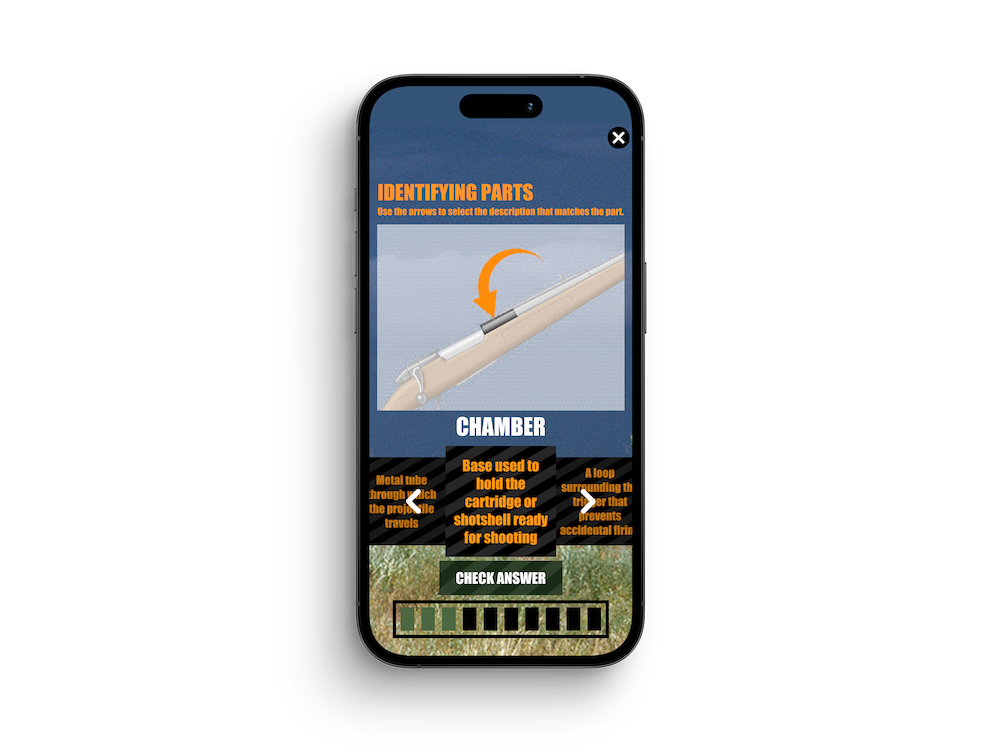
- Firearms safety: Know the cardinal rules of safe firearms handling, proper muzzle awareness, safety manipulation, trigger discipline, and the importance of maintaining a safe zone of fire.
- Ammunition: Develop a better understanding of gauge and caliber identification, proper ammunition storage, matching ammunition to the firearm and species you’re hunting, and the differences between lead and nonlead shot.
- Hunting ethics: Learn about the rules of fair chase, how to interact with landowners, respect for other hunters, and your responsibility to report legal issues.
- Wildlife identification: Learn to recognize game animals, genders, and protected species, and understand why identification is critical before taking a shot.
- Hunting regulations: Familiarize yourself with your state's hunting seasons, bag limits, possession limits, licensing requirements, and legal hunting methods.
- First aid and survival: Learn how to signal an emergency, find shelter, hydrate, plan a trip, and provide basic first aid.
Another key subject for deer and black bear hunters is tree stand safety. Hunting from an elevated position requires knowing how to use a full-body harness and the importance of staying connected while on the stand, ascending, and descending.
Each of these topics is taught, and then reinforced, throughout the course. Quizzes at the end of each module help evaluate your knowledge before advancing to the next topic.
Why Scenario-Based Learning Sticks
Hunter education topics in a traditional course might be presented passively. For example, firearm safety might be instructions to remember to unload a weapon at the end of a hunt.
A scenario-based format, like the one used by ilearntohunt, puts your character in a situation that requires you to decide whether you need to unload the firearm.
The same instructional format also helps improve your wildlife identification skills. Instead of memorizing photos or diagrams, students must positively identify animals in scenarios and then make a shot decision while considering what’s in front of and behind the animal, and whether or not the shot is safe and legal.

How you learn these topics is key to success and safety in the field. Since hunters rarely encounter written multiple-choice questions in the field, developing the skills to recognize a situation, recall what you’ve learned, and make the right choice is critical. That’s why scenario-based lessons help students retain that thought process without facing the consequences of a real-world mistake.
No Timers
To help the course material stick, no module during the ilearntohunt course has a time requirement. Students work through the decision-making process, understand why their choice was right or wrong, and move forward when they are ready.
Note that the ilearntohunt course format doesn’t change the topics being taught. Each state-approved course covers the required fundamental safety, conservation, ethics, and regulatory requirements in a traditional in-person hunter education course. The only difference is in how the material is taught.
Learn Every Rule Before You Need It in the Field
Whether your course is taught in a traditional classroom or online, the foundational hunter education topics are the same. So, what does hunter ed cover? It establishes a solid foundation in firearms safety, ammunition requirements, wildlife conservation, emergency preparedness, hunting ethics, and the resident state’s regulations.
The key difference between a traditional class and an online ilearntohunt course is how you learn. Instead of reading rules or just watching videos, ilearntohunt uses interactive scenario-based situations to help students make correct decisions throughout the course and later, in the field.
The knowledge gained from this teaching methodology transfers immediately to hunting. Knowing how to handle a firearm properly and safely, identify wildlife correctly, respond appropriately to emergencies, and make ethical choices matters more in the field than memorizing exam answers.
The self-paced, untimed modules in your state's ilearntohunt course help students understand the principles behind each lesson while building a solid foundation that supports a lifetime of hunting long after hunter education certification is complete.

Frequently Asked Questions (FAQs)
Q: What topics does hunter education cover?
A: Hunter education covers firearm and ammunition safety, hunting laws and regulations, wildlife identification, conservation, hunting ethics, first aid, outdoor survival, and tree stand safety. These topics help hunters understand their responsibilities and make safe, informed decisions in the field.
Q: Does the ilearntohunt course cover state-specific regulations?
A: Yes. When enrolling, students select their state of residence to access the appropriate approved course. The course includes a state-specific regulations module covering hunting seasons, bag limits, possession limits, licensing requirements, and legal hunting methods.
Q: How does ilearntohunt teach firearm safety compared to a classroom course?
A: Both online and classroom courses teach the required firearm safety principles, including proper handling, muzzle awareness, trigger discipline, and safe storage. The difference is the teaching method. Traditional classes generally use instructor-led lessons and demonstrations, while ilearntohunt uses interactive scenarios that ask students to make safe decisions in realistic hunting situations.
Q: Is the hunter education curriculum the same at every approved provider?
A: State-approved providers must cover the required hunter education topics established by their state's wildlife agency. These include fundamental safety, hunting laws, conservation, and ethics. However, providers can use different teaching methods, lesson formats, and activities to deliver the material.
Q: Does hunter education cover archery and bowhunting?
A: Some hunter education programs introduce basic archery safety, but bowhunting-specific instruction may require a separate bowhunter education course. Bowhunter education covers additional topics such as bow equipment, shooting techniques, shot placement, and game recovery. Check your state's requirements to determine whether separate certification is necessary.
Q: How long does it take to complete the ilearntohunt course?
A: The ilearntohunt course is self-paced, with no timers or required time limits for individual modules. Some students complete the material in one sitting, while others spread it across multiple sessions. The final exam takes approximately 30–45 minutes, and students can retake it as needed to pass.
Q: Can my hunter education certification transfer if I move to a new state?
A: Generally, yes. Most states recognize hunter education certificates earned in other states, so you typically won't need to repeat the course when you move. However, some states require additional steps to transfer your certification or register it with their wildlife agency. Check your new state's requirements before purchasing a hunting license.