Types of Shotgun Sights: Bead, Fiber Optic, Ghost Ring Guide
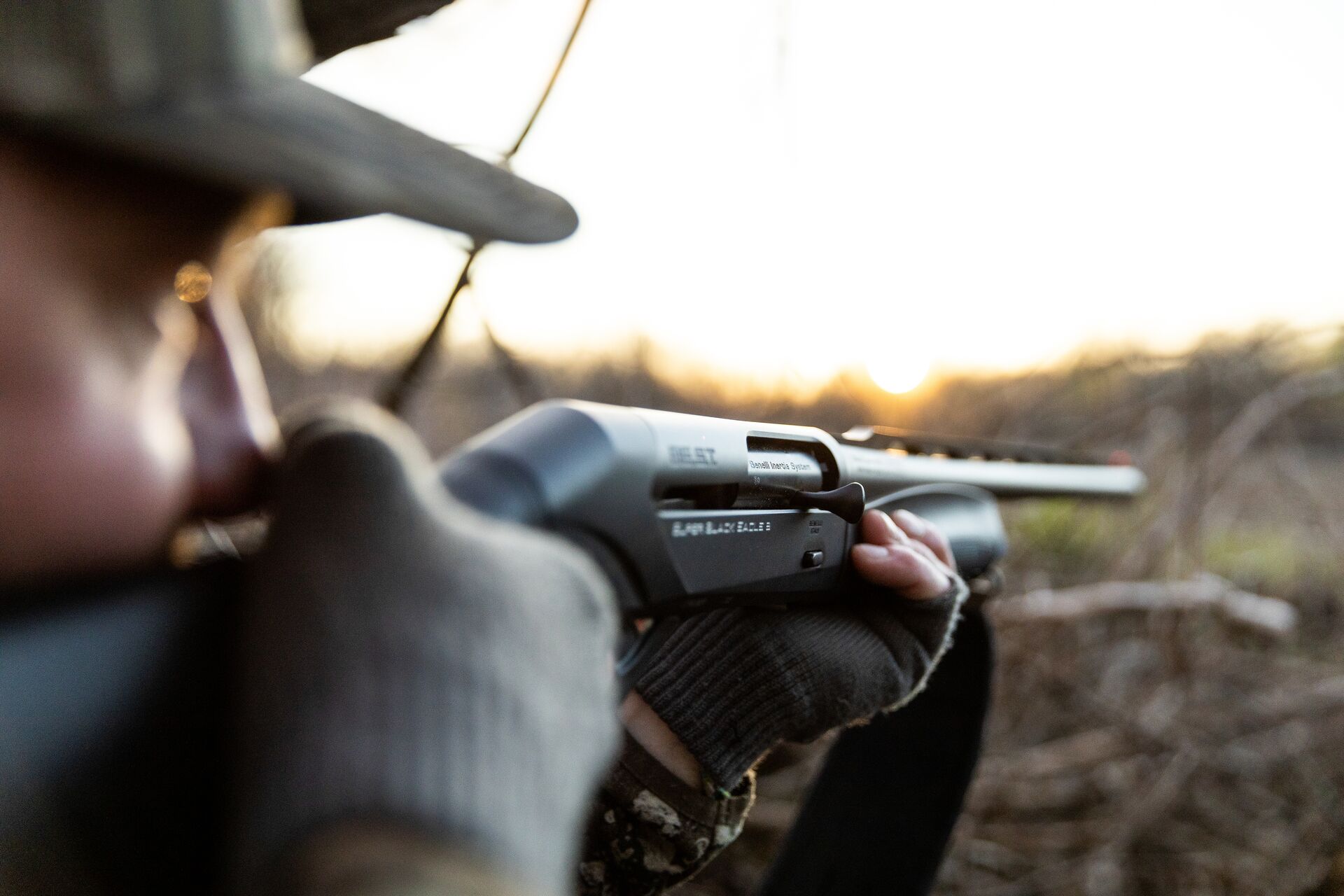
The main types of shotgun sights include bead sights, fiber optic sights, ghost ring sights, open iron sights, and red dot optics. Bead sights are used for quick target acquisition on moving game, while ghost ring and red dot sights provide more precision for stationary or longer-range shots. Each sight type is suited for different hunting situations.
Whether you're a wing shooter or a whitetail hunter, mastering your shotgun's sights is critical to a successful and safe hunt. From the time-tested traditional bead sights to today's advanced electronic optics, knowing the pros and cons of each sighting system can dramatically improve your effectiveness in the field.
Here's what you need to know about the types of shotgun sights and how to use them on shotgun firearms!
Table of Contents
- What Are the Types of Shotgun Sights?
- The Importance of Proper Alignment
- Sighting Practice Tips
- How to Sight In Your Shotgun
- Adjusting Your Sights
- Using Sights on Shotguns in Different Hunting Scenarios
- Maintaining Your Sights
- Common Mistakes (and How to Avoid Them)
- Learn More with Hunter Education
- Frequently Asked Questions (FAQs)
Updated May 13, 2026

What Are the Types of Shotgun Sights?
There are several types of shotgun sights, each with advantages and preferred hunting scenarios.
Types of Shotgun Sights | |
Bead SightA bead sight is the most common shotgun sight. It consists of a small metal or plastic bead mounted on top of the end of the barrel. Bead sights provide a quick reference point for aiming and allow for rapid target acquisition. They are optimal for fast-moving targets in upland and waterfowl hunting. | 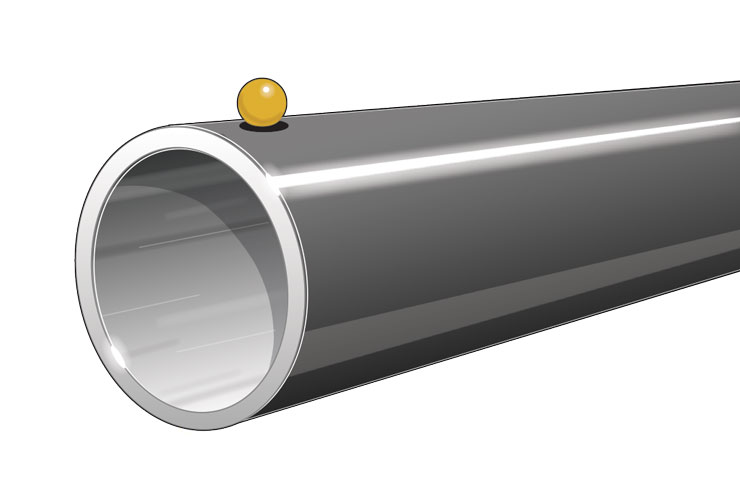 |
Open Iron SightsWith a notch mounted on the shotgun's receiver and a front post just behind the muzzle, iron sights offer more accuracy for aimed shots. Aligning the rear sight and the front post on the target provides a more precise aiming point when hunting with slugs or buckshot. | 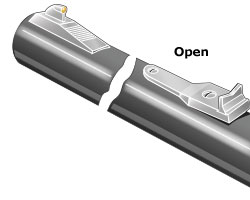 |
Electronic (Red Dot) SightsElectronic sights rely on a battery to project a red dot or holographic image on a coated, slightly angled piece of glass mounted on the receiver. These sights increase accuracy at close to medium ranges and are optimal in low-light scenarios.
| 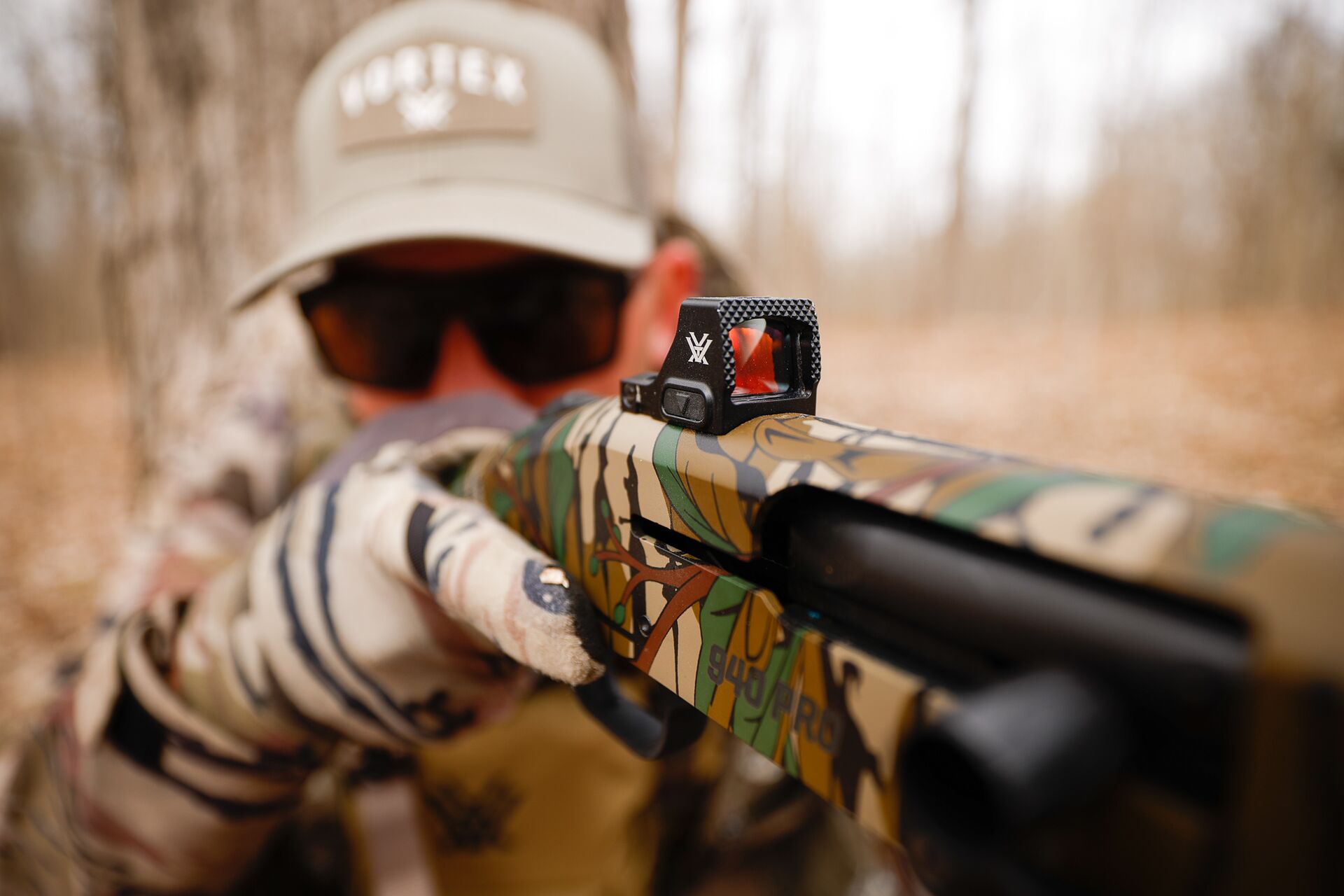 |
Fiber-Optic SightsFiber-optic sights gather sunlight and funnel it to the fiber's front post endpoints. This creates a brighter light than the surrounding light, making it an ideal sight option for low-light shooting. | 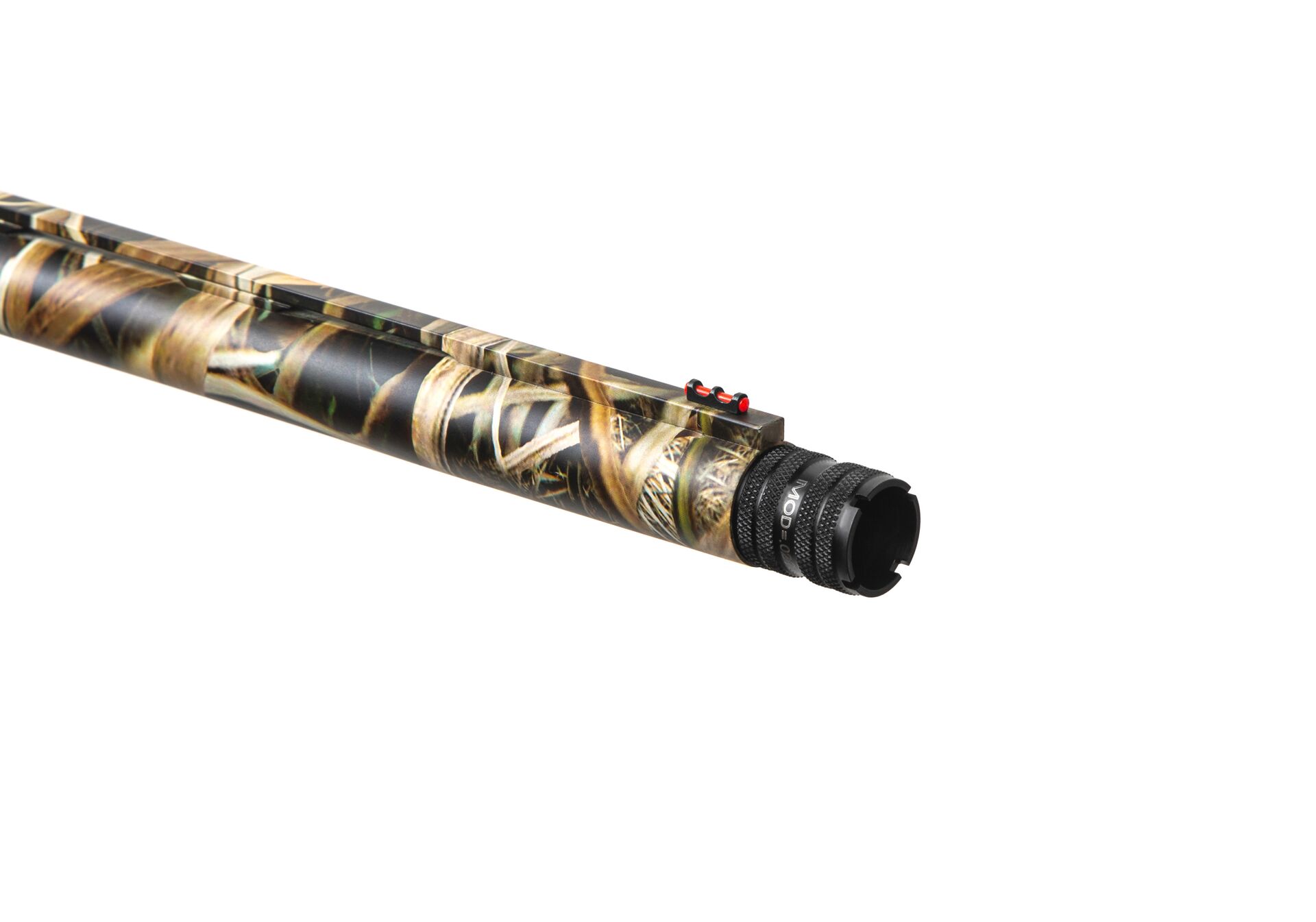 |
Lastly, ghost ring sights are a game-changer for hunters who need to acquire targets quickly in the field.
The thin rear ring and thick front post work together naturally — your eye automatically centers the post in the ring without you even thinking about it, letting you stay focused on your quarry. The rear ring blurs out of your vision, almost like it disappears, so nothing distracts you from making a clean, accurate shot.
The Importance of Proper Alignment
No matter which shotgun sighting system you use, proper sight alignment is critical to hitting your target and reducing the risk of shooting in an unsafe direction.
With bead, fiber-optic, and electronic sights, focus on the target while keeping the bead or dot in your peripheral vision. This lets you quickly "point and shoot" at fast-moving, close-range targets.
When using an iron sight, center the front post in the rear notch, with the tops level with each other. Keep your focus on the front sight to increase accuracy for stationary or longer-distance targets.
Sighting Practice Tips
Dry fire practice at home is the best and cost-free way to improve your sighting skills and develop proper muscle memory.
Using an unloaded shotgun, practice:
- Mounting the shotgun to your shoulder in one smooth motion
- Pointing at the target for wing shooting or aiming iron sights with proper front and rear sight alignment
- Pressing the trigger without causing the sight to move
Wear the clothes you'll be using on your hunt to identify any issues restricting your movement or preventing the shotgun from correctly mounting on your shoulder and upper chest.
How to Sight In Your Shotgun
Before practicing or heading out for a hunt, always sight in your shotgun to verify your point of aim aligns with the point of impact.
| Here's an easy five-step process to sight-in your shotgun: |
Then, repeat steps 2-5 until your point of aim is the same as your point of impact. |
Go through the sighting process with each type of choke and ammunition you'll use during the hunting season.
Adjusting Your Sights
Electric and iron sights on shotguns can be adjusted to correct for windage (left-right) and elevation (up-down).
- Windage Adjustments: Move the rear sight in the direction you want your shots to be. To shift your point of impact to the right, move the rear sight to the right. To shift your point of impact to the left, move your rear sight to the left.
- Elevation Adjustments: Remember the phrase "raise to raise, lower to lower." Raising the rear sight will raise the point of impact while lowering it will lower it.
You may need to adjust your sights when using different ammunition and shooting at various distances.
"Hold off" is adjusting your aim above or below your target to compensate for projectile drop at distances outside your sight-in range. This allows for quick elevation adjustments without changing your sights.
For example, with a 40-yard zero, you might have to aim one inch high at 50 yards or two inches low at 20 yards.
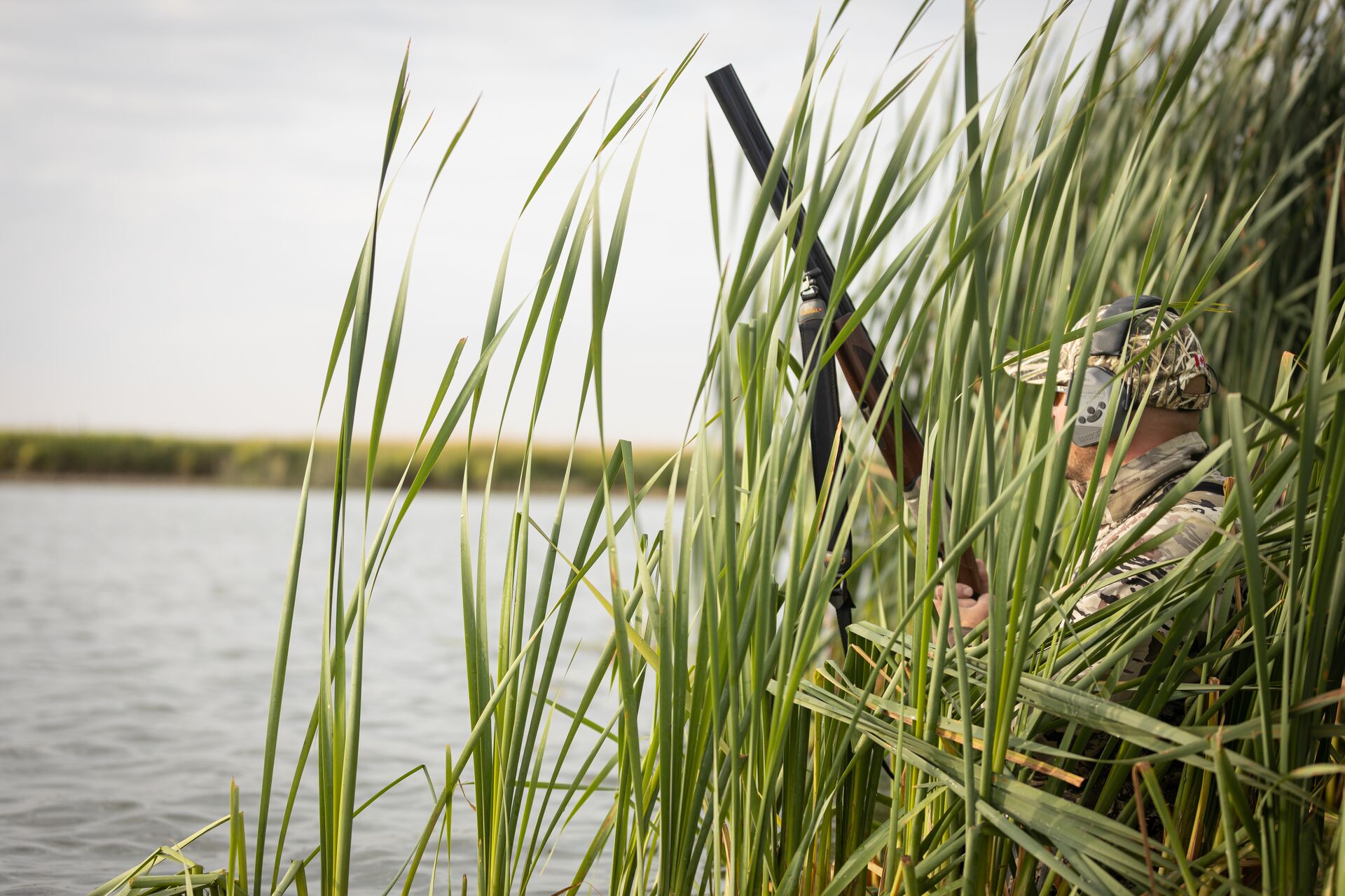
Using Sights on Shotgun Firearms in Different Hunting Scenarios
No matter what you hunt and which sight you use, focus on proper sight alignment and sight picture, and take a deliberate approach to aiming to achieve the best shot placement.
Shotguns and Different Hunting Scenarios | |
| Upland bird hunting | Requires quick target acquisition when a bird flushes. Bead or fiber-optic sights are preferred for these fast-paced upland bird hunts. When a bird flushes, you don't have time to aim. Point the sight at the bird, focusing on the target. Let your instincts guide the shot. This method is called "point shooting." |
| Waterfowl hunting | Often takes place shortly after dawn or just before sunset. These low-light conditions are perfect for fiber-optic or red dot sights. Since ducks fly fast and the shots are at longer distances, you'll need to use your sight to shoot ahead of — or lead — the bird. Use your sight as a reference point to develop your lead based on the bird's speed, distance, and elevation. |
| Big Game hunting | Requires precision for ethical and effective shots, especially when using slugs. Experienced hunters prefer using iron or electronic sights to achieve the required accuracy. |
Maintaining Your Sights
Regularly maintaining your sights on shotgun firearms will ensure they remain functional and accurate during hunting season.
Keep your sights clean by wiping them down with a soft cloth to remove debris, moisture, or carbon deposits after every session. Use a camera lens brush or air duster to clean the glass on red dot and holographic sights gently.
Before you take your shotgun to the field, check that all sights are securely mounted to it and no screws or mounting hardware is loose.
When transporting your shotgun, place it in a padded soft case or hard case to avoid damaging your sights or knocking them out of alignment.
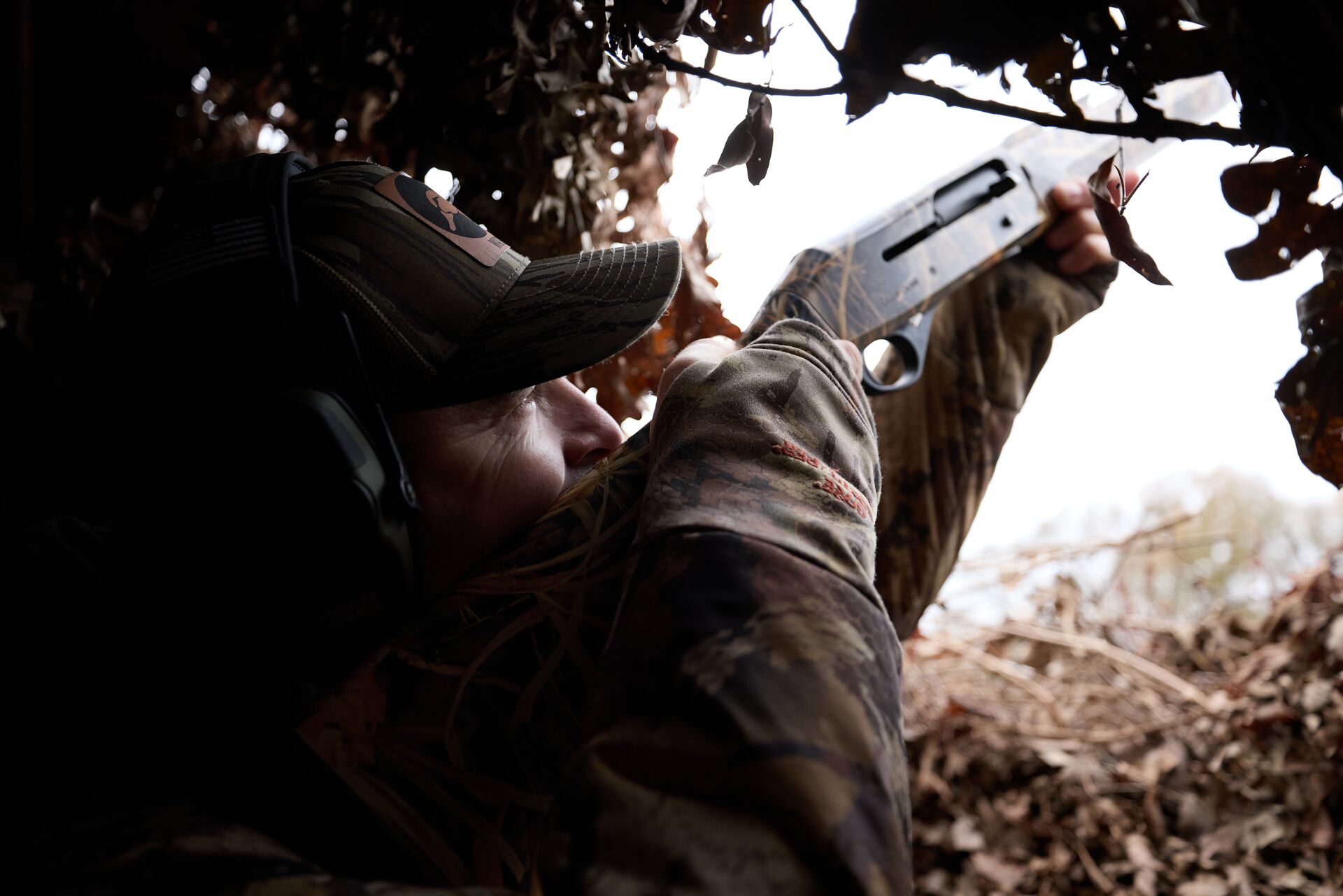
Common Mistakes (and How to Avoid Them)
Don't get discouraged if you're having trouble using your sights. Here are some common issues and how to correct them.
Focusing on the Wrong Object
When using a bead or electronic sight, your focus needs to be on the target, not the sight.
This is contrary to how most sights are used and can take some time to get used to.
When using iron sights with a rear sight and a front post, the front post should be in sharp focus and your target slightly blurred. Use dry practice to train your eye to focus on what it needs for your specific sighting system.
Inconsistent Eye Relief
If your focus is correct, but you're still getting inconsistent shot placement, the likely culprit is eye relief (the distance between your eye and the sight).
Irregular placement of the stock in your shoulder pocket and your cheek weld will change the eye relief every time you mount the shotgun, inducing sight alignment errors. To avoid these inconsistencies, develop a consistent mounting position through dry practice.
Over-Adjusting Sights
Adjusting your shotgun's sights requires a methodical approach and patience. There is always a temptation to make sight adjustments based on insufficient data from a single shot or a widespread group. However, this will lead to chasing the point of impact all over the target.
Instead, make sight adjustments based on the average of multiple three-shot groups. Adjust in small increments, shooting more three-shot groups to verify your changes.

Learn More About Shotgun Sights and Safety with Hunter Education
Understanding and correctly using your sights on shotgun firearms is an indispensable skill for every upland, waterfowl, and big game hunter. Mastering your shotgun's sighting system and knowing how to use it with various ammunition at varying distances will increase your confidence and effectiveness in the field.
Practice the tips we've shared today to improve your shooting accuracy. Take a hunter education course through ilearntohunt to keep your skills sharp and improve your safety knowledge before your next hunt. Our gamified online courses offer valuable lessons on firearms safety, weapons handling skills, conservation practices, and more.
In most states, hunters must pass a hunter education course before getting a hunting license.

Content most recently reviewed and updated May 13, 2026.
Frequently Asked Questions About Types of Shotgun Sights (FAQs)
Q: What type of sight is used on a shotgun?
A: Shotguns most commonly use a simple bead sight, which is a small, round post mounted at the end of the barrel. Some shotguns also use rifle-style sights with a front and rear sight, or more modern optics like red dot sights. The type of sight varies depending on the intended use, such as hunting, sport shooting, or home defense.
Q: What are the 4 types of sight pictures?
A: The four types of sight pictures are the bead sight picture, the flat sight picture, the combat or defensive sight picture, and the optical/red dot sight picture. The bead sight picture involves focusing on the bead at the end of the barrel and aligning it with the target. The flat sight picture aligns the front and rear sights at the same height, while the combat sight picture places the front sight slightly above the rear notch for faster target acquisition.
Q: What's the best sight for a shotgun?
A: The best sight for a shotgun depends on its intended purpose. For bird hunting and clay sports, a simple bead sight is widely preferred for its speed and natural pointability. For slug shooting, deer hunting, or defensive use, a ghost ring rear sight paired with a front bead or post offers much greater precision at longer distances.
Q: What are shotgun sights called?
A: The most basic shotgun sight is called a bead sight, named for its small, rounded shape at the muzzle end of the barrel. More advanced setups may include a mid-bead and a front bead together, known as a two-bead or tandem bead system. Rear sights on shotguns, when present, are often called ghost ring sights, rifle sights, or peep sights, depending on their design.
Q: What type of sight is most accurate on a gun?
A: For precision shooting, optical sights such as scopes and red dot sights are generally considered the most accurate because they reduce the number of variables the shooter must align. Among iron sights, a peep or aperture sight is widely regarded as the most accurate due to the natural way the eye centers the front sight within the rear aperture. The best choice ultimately depends on the firearm type, range, and shooting application.
Q: What type of sight is commonly found on shotguns?
A: The most commonly found sight on a shotgun is the single front bead sight, a small metal or fiber optic ball mounted near the muzzle. It serves as a simple reference point rather than a precise aiming device, relying on the shooter's instinct and natural pointing ability. Fiber optic beads have become increasingly popular because they gather light and are easier to see quickly in various lighting conditions.